
A founder proudly showed me her latest webinar: 300 registrations, "a huge hit." I asked how many had made it to a sales call afterward. Silence. Nobody had followed up with those 300 people — the webinar was recorded, dropped into a shared drive, and died right there. She'd mistaken applause for a result.
That's the core mistake. Webinars to generate leads rarely fail because of the content — they fail because they're treated as a one-day event instead of a system. And there's a reason they're so worth the effort: anyone who blocks an hour of their calendar to listen to you has already qualified themselves. Nobody gives away 60 minutes for something they don't care about. Below I'll walk through how to set it up right, which formats work, and how to measure whether it actually contributes. If you'd rather we build it for you, we do that; but even if you run it in-house, this guide will help.
Why a webinar qualifies leads on its own
In the middle of the funnel, most content is passive: an article, a PDF, a post. Someone consumes it in 30 seconds and moves on. A webinar is different because it asks for something expensive in return: live, scheduled time. That entry cost is exactly what turns it into a filter.
Think about it this way: a lead who downloaded your ebook might just be browsing. A lead who blocked an hour on Tuesday, showed up, and stayed through the Q&A is declaring intent without you having to ask. Not all registrations are worth the same — and that difference is the gold mine most people ignore.
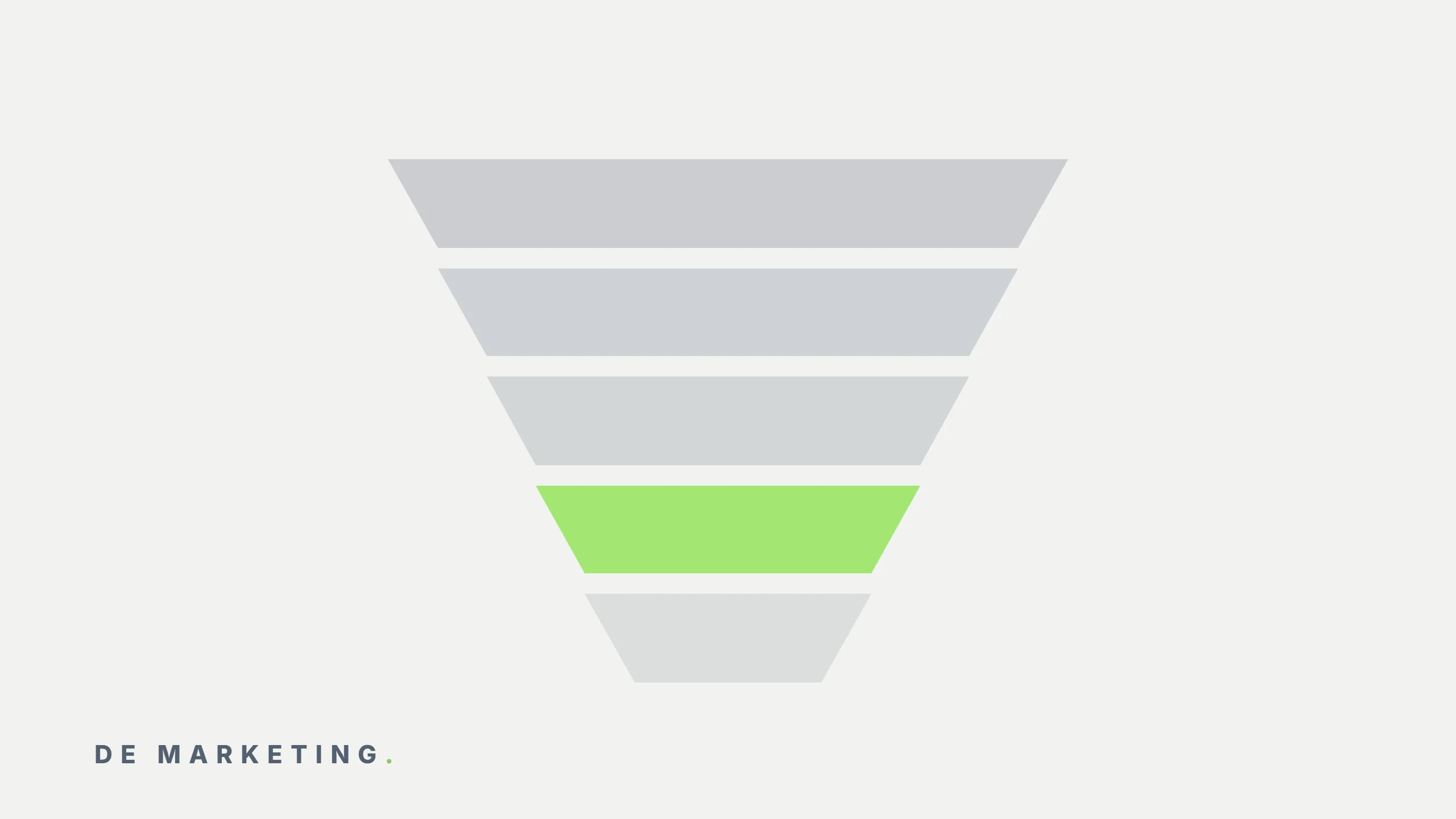
That's why the webinar fits so well in the middle of the funnel, where the prospect already knows you but isn't ready to talk to sales yet. It's the bridge between "they know I exist" and "they want a proposal" — the same ground we work in lead nurturing.
The mistake of treating it as an event (not a system)
The webinar itself is the smallest part of the work. Most people spend 90% of their energy on the day of the event and 10% on everything else. It should be the other way around. A webinar that generates leads has three phases, not one:
- Before — promotion. Two or three weeks of email invitations, organic reach, and — if there's budget — paid. Registration is your first conversion, and every registrant is a tagged lead from that moment on.
- During and after — on-demand. The live event is barely the kickoff. A well-packaged recording keeps capturing registrations months later. A good webinar is a perpetual asset, not an event that expires at 8 p.m.
- After — the follow-up sequence. This is where it's won or lost. Whoever attended gets one thing; whoever registered but didn't show up, another; whoever stayed to the end, another still. Without this sequence, your 300 registrations go cold in 72 hours. Here's how we build it: Email marketing sequences.
When you see the webinar as a system, the event stops being the goal and becomes the trigger for a machine that keeps working for weeks.
Formats that work when selling to companies
Not all webinars serve the same purpose. Picking the wrong format is the fastest way to end up with 300 registrations that go nowhere. These are the ones that actually move pipeline:
| Format | What it's for | Intent level |
|---|---|---|
| Masterclass / how to do X | Awareness and top-of-funnel capture | Medium |
| Panel with experts or a client | Authority and social proof | Medium-high |
| Themed demo (not a product demo) | Educate on the problem, don't sell | High |
| AMA / open Q&A | Qualify and surface real pains | Very high |
The rule: the closer the format gets to a real conversation, the more it qualifies. A masterclass brings you volume; an AMA brings you the five people who already have the problem and want to solve it. You need both, but for different stages of the funnel. If your problem is getting leads consistently rather than in bursts, a recurring webinar is one of the most reliable pieces — I unpack it in how to generate leads consistently.
How we do it
There's no magic. It's the same principle of honest, end-to-end measurement we set up in the Seismic Method, applied to the webinar:
- First-party source capture at registration: every registrant is tagged with the channel and campaign that brought them, and that data travels with them — so you know whether the webinar attracts the right profile or just curious browsers.
- Everything lands in a CRM, not a spreadsheet or the webinar platform's list. The lead is born tagged with its behavior: registered, attended, stayed to the end, asked a question. That detail is what lets you prioritize who sales calls first.
- n8n automation to close the loop: when the event ends, the follow-up sequence fires on its own, segmented by behavior — no one exports a CSV by hand, and no leads go cold while someone gets around to it "when they have time."
That's how the webinar stops being an isolated event and becomes a permanent entry point into your demand system.
How we help
If you don't want to spend weeks wiring up registration, the CRM, behavior segmentation, and follow-up sequences, that's exactly what we do: we build the webinar as a system so every registrant enters your funnel tagged and no intent goes cold. Book a diagnostic and we'll review it with your numbers.
The bottom line
Attendance isn't the KPI. It's a vanity metric that feels good and doesn't make payroll. The KPI is pipeline: how many real opportunities were born from that webinar and how many advanced. Treat it as a system — promotion, on-demand, and follow-up — measure it by what it contributes to the funnel, and stop counting applause.
Want to know what your content is truly contributing to pipeline? Book a diagnostic, no strings attached and we'll look at it with your numbers, not ours.
Related services
Want to implement this in your company?
Leave your website and within minutes you'll get a reading of your marketing by email: step 1 of the Método Sísmico.
Start your Levantamiento